
The Post-Purchase Meta Ads Funnel: Multiplying Profit with Cross-Sell and Upsell Strategies
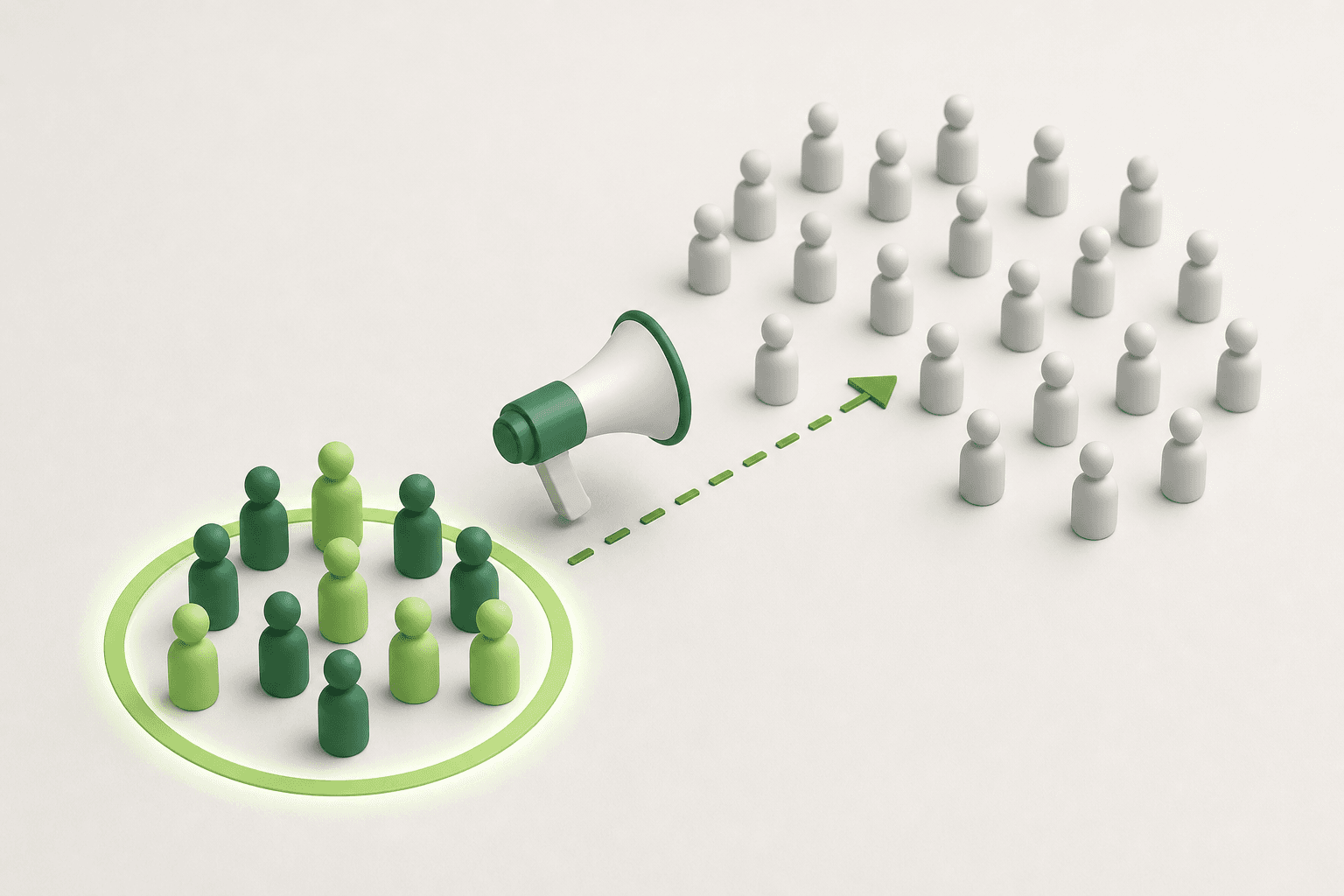
Do you know where most e-commerce brands make their biggest mistake? They stop showing ads the exact moment a customer clicks 'Complete Order'! In digital marketing, acquiring a new customer (CAC) is always the most expensive step. However, the real profit begins *after* that customer places their first order. The 48 hours following the order confirmation page is a golden window where the customer's trust in your brand is at its peak, and their wallet is technically still open. This is exactly where post-purchase strategies enter the chat and change the rules of the game.
Why Focus on Post-Purchase Ads?
The probability of selling to an existing customer is 60-70%, whereas the probability of selling to a new prospect is only 5-20%. When a customer buys from you, they have already entered their credit card details, accepted your shipping terms, and trusted your brand. Using Meta ads to instantly retarget this warm audience is the fastest way to maximize Customer Lifetime Value (LTV).
3 Post-Purchase Campaign Strategies to Multiply Your Profit
1. The Complementary Product (Cross-Sell) Campaign
Let's say a customer bought a pair of high-quality leather shoes from you. In the days following their order, the Meta ads they see shouldn't be random; they should be for shoe polish, a matching leather belt, or premium insoles. A message like, 'Your new shoes are on the way! Grab this care kit at a 20% discount to keep them looking brand new' is an offer that's incredibly hard to refuse.
2. The Stock-Up / Subscription (Upsell) Campaign
If you are selling consumable goods (coffee, cosmetics, supplements), you can predict exactly when your customer will run out. A brand selling a 30-day supply of vitamins should hit the customer with an ad on day 21: 'We know you're running low. Switch to our 3-month bundle, never run out, and save 30%!' With this strategy, you can push your customer loyalty and retention rates to unbelievable heights.
3. The 'Gift a Friend' (Referral) Campaign
If your customers love your products, turn them into brand ambassadors. About 7 days post-purchase (when the product has likely arrived), run a Meta ad saying: 'Loving your new gear? We generated a special code for you to gift to your best friend, and you get $20 off your next order too!' This setup is perfect for triggering organic virality via paid social.
Technical Setup: How Do We Configure the Audiences?
The biggest amateur mistake in this strategy is showing the exact SAME product to someone who just bought it. You must create a 'Purchasers - Last 30 Days' Custom Audience in your Meta Business Manager and strictly Exclude this audience from your Top-of-Funnel Acquisition campaigns. Instead, use this specific audience as the sole target for your newly created Cross-Sell and Upsell campaigns.
Step-by-Step Setup: From Pixel to Your First Post-Purchase Campaign
- Step 1: Verify your purchase data.
Everything depends on a working Purchase event. In Events Manager, check that your Purchase event arrives with the order value and currency, and ideally with product IDs (content_ids) as well. Run the Pixel together with the Conversions API to reduce data loss; our Meta Pixel and Conversions API guide walks through the setup. - Step 2: Build custom audiences by time window.
When creating a website custom audience, choose the Purchase event and save separate audiences for different lookback windows, for example 'Purchasers – 7 days', 'Purchasers – 30 days' and 'Purchasers – 90 days'. This lets you match each campaign to the right moment in the customer's journey. - Step 3: Layer your exclusions.
Exclude 'Purchasers – 7 days' from your stock-up (upsell) campaign and 'Purchasers – 30 days' from your acquisition campaigns. This stops the same person from seeing three competing ads at once. - Step 4: Choose the campaign objective.
For cross-sell and upsell, the Sales objective with Purchase as the optimization event is usually the logical choice. 'Highest volume' is a fine starting bid strategy; once you know your break-even point, you can test a 'cost per result goal'. - Step 5: Map product sets to creatives.
For every hero product, list the items that naturally go with it ('people who buy this also need that'). If you have a catalog, group those items into dedicated product sets and serve them dynamically with Meta catalog ads. If building every ad by hand slows you down, Adsaify can generate the ad from the complementary product's page link and publish it straight to Meta (your first ad is free).
Timing and Strategy Comparison Table
Each of the three strategies needs a different goal, a different timing and a different audience definition. The day ranges are not fixed rules; treat them as starting points and adjust them to your own shipping and consumption cycle.
| Strategy | Main goal | Example timing | Audience setup | Metric to watch |
|---|---|---|---|---|
| Cross-sell | Sell a complementary product | First 1–14 days after the order | Purchasers in a specific category, last 14 days | Complementary product sales, ROAS |
| Stock-up / Subscription (Upsell) | Move to a bigger bundle or a subscription | Close to run-out (e.g. days 20–25 for a 30-day product) | Purchasers 30 days, excluding purchasers 18 days | Repeat purchase rate, AOV |
| Gift a Friend (Referral) | Bring in new customers | After delivery (e.g. days 7–21) | Purchasers 21 days, excluding purchasers 7 days | Code redemptions, new customers |
The 'X days, excluding Y days' structure is the simplest way to isolate a specific window. For example, if you target purchasers from the last 30 days and exclude purchasers from the last 18 days, your ad only reaches people who ordered between 19 and 30 days ago.
Worked Example: Does a Cross-Sell Campaign Actually Make Money?
The numbers below are purely hypothetical and only illustrate the math. For example, imagine a store that sells coffee machines and shows coffee beans and a milk frother to everyone who bought a machine in the last 30 days.
- Ad spend: $1,500 for the month
- Cross-sell orders: 40 orders at an average of $110, so $4,400 in revenue
- ROAS: 4,400 / 1,500 ≈ 2.9
- Gross profit: assuming a 40% product margin, 4,400 × 0.40 = $1,760
- Profit after ad spend: 1,760 – 1,500 = $260
The campaign is profitable, but only just: ROAS alone isn't enough, so always run the numbers against your own margin. And the real value of these campaigns often shows up not in the first add-on order but in revenue per customer over time (LTV), so judge results on that too.
Common Mistakes and How to Fix Them
Mistake 1: Showing the product they just bought
The most common issue with dynamic catalog ads is a customer seeing the exact item they just purchased. The fix is to use the settings that exclude purchased items and to build clean product sets. Our guide on stopping Meta DPA ads from retargeting purchased items covers this step by step.
Mistake 2: Letting existing customers inflate acquisition results
Automated campaigns such as Advantage+ can spend part of the budget on people who have already bought from you unless you set limits, which can make your new-customer results look better than they are. Define your existing customers in your ad account settings and read your reports with that in mind. We cover this in detail in how to fix ASC retargeting cannibalization.
Post-Purchase Funnel Checklist
Before you launch, tick off each item on this list:
- The Purchase event shows up in Events Manager with order value and currency.
- The Pixel and Conversions API run together without double counting (deduplicated with event_id).
- 7-, 30- and 90-day purchaser audiences are created.
- Purchasers are excluded from acquisition campaigns.
- Every hero product has at least one complementary product and one upsell offer.
- Catalog ads are set up so purchased items are not shown again.
Frequently Asked Questions (FAQ)
- Question: Won't post-purchase ads annoy the customer?
Answer: If you try to sell them the exact same thing they just bought, yes. But if you offer them a complementary product that genuinely enhances their experience at a great price, they will perceive it as a VIP service. - Question: What time window works best for retargeting buyers?
Answer: It depends on what you sell. For digital products or instant-use items, the 0-3 day window post-purchase is highly effective. For physical goods like cosmetics, it's better to target the 7-14 day window, factoring in shipping and delivery times. - Question: How much of my budget should I allocate to Post-Purchase ads?
Answer: Generally, dedicating about 10-15% of your total Meta ad budget to this extreme Bottom-of-Funnel stage is an ideal ratio for boosting overall LTV. - Question: Should I only do this on Meta?
Answer: No, you will achieve exponentially higher conversion rates when you synchronize these Meta ads with your Email marketing and SMS flows (an Omnichannel approach). - Question: My post-purchase audience is tiny. Will the campaign still work?
Answer: It can, but set realistic expectations. Small audiences make it harder to exit the learning phase. Consolidating ad sets, widening the lookback window (for example 60–90 days instead of 30) and adding your customer list are practical ways to increase volume. - Question: Which campaign objective should I choose?
Answer: Since the goal is an additional sale, the Sales objective optimized for Purchase is the right starting point in most cases. For referral campaigns, where the goal is a new customer, it also helps to track code redemptions separately. - Question: Do I have to offer a discount in post-purchase ads?
Answer: No. Discounts work, but they are not the only lever. A free-shipping threshold, bundle pricing, a free sample or a helpful usage guide can perform well too, and they protect your margin.
Conclusion
True success in e-commerce isn't about finding one-time buyers; it's about transforming those buyers into loyal, raving fans of your brand. By correctly structuring your post-purchase Meta ad funnels, you can drastically increase your profit margins without acquiring new top-of-funnel costs. To set up this technical infrastructure, optimize your audiences, and build a flawless growth strategy, contact Adsaify today!