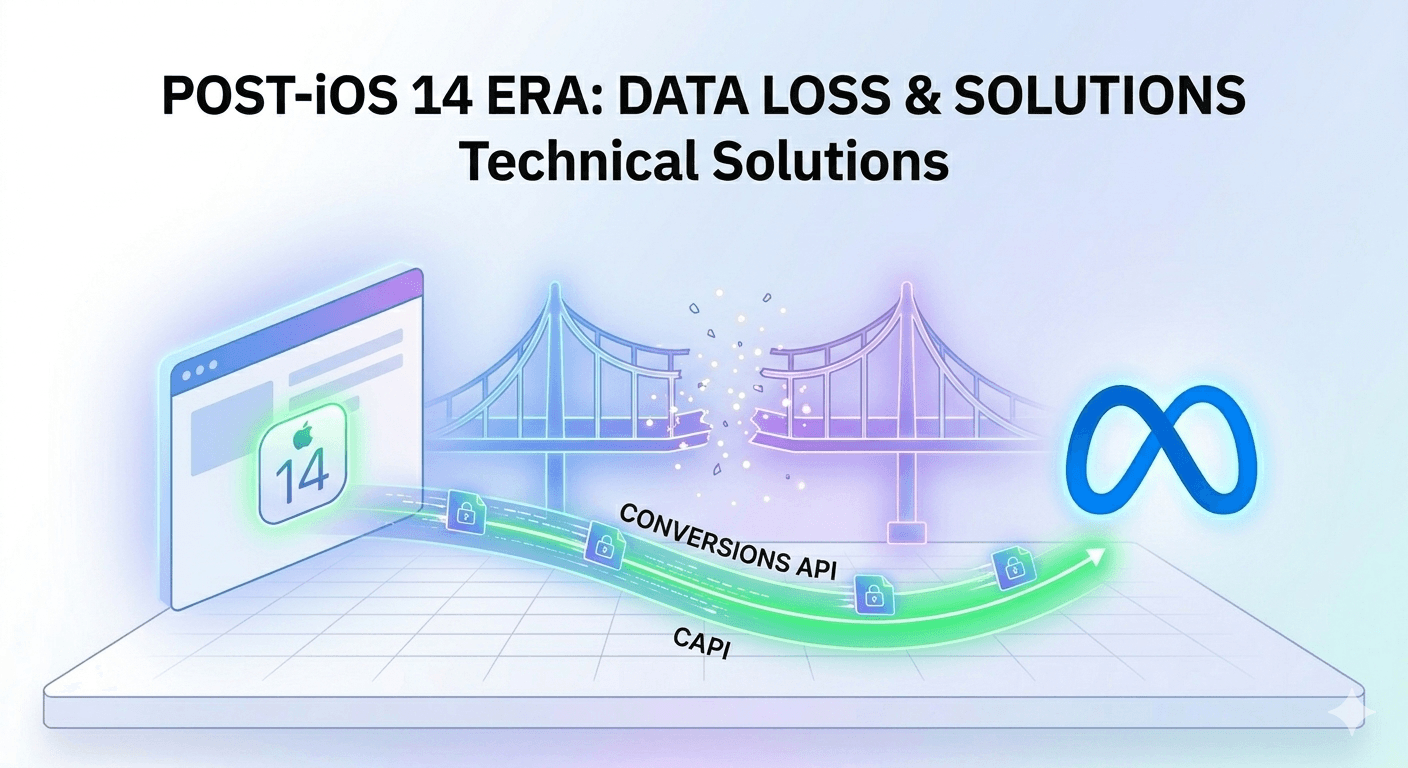

Introduction: The digital marketing world was shaken by Apple's introduction of the iOS 14 ATT (App Tracking Transparency) framework. This update allowed users to choose whether they wanted to allow apps to track their data, and a vast majority chose "no." This drastically limited the Facebook Pixel's ability to track conversions on websites. For advertisers, this meant higher costs, lower conversion rates, and difficulty in audience targeting. In this blog, we deeply analyze the effects of this crisis and the technical solutions needed to stay afloat.
Content:
Why is the iOS 14 Impact So Significant? Pixel used to track users on your website via cookies. iOS 14 blocked most of these cookies. Meta can no longer clearly see who bought or who added to cart as before. This means the "Conversion Optimization" algorithm is unfed.
Investing in First-Party Data: You can no longer rely on Meta to provide you with data. You must collect your own data (first-party data). Email lists, phone numbers, and CRM data are now gold for creating ad audiences.
Aggregated Event Measurement (AEM): This is Meta's solution to this data loss. You must prioritize the top 8 conversion events on your website. When an iOS 14 user makes a purchase, Meta can only see the highest priority event (e.g., Purchase).
Conclusion: Success in the post-iOS 14 era requires technical adaptation. Relying solely on Pixel is no longer sufficient; you must build your own data infrastructure.
Data Tracking & Technical
Combating Data Loss Post-iOS 14: Technical Solutions

Author
Adsaify
Posted on
March 17, 2026
Read Time
6 minutes
Views
20