Short answer: High CPA results from factors like audience mismatches, poor ad copy, and low conversion rates. Understanding and addressing these issues optimizes your ad spend.
High Cost Per Acquisition (CPA) is a concern that many marketers encounter when running Meta ads. You may have noticed that despite investing significant amounts into your campaigns, the number of conversions remains disappointingly low. This could mean that you are paying much more for each customer than necessary, which directly impacts your return on investment and overall profitability. The root causes of high CPA can vary widely, including audience mismatches, ineffective ad creatives, or even issues with your landing pages. If these factors are not addressed promptly, they can lead to wasted ad spend, decreased campaign performance, and ultimately, a negative impact on your business growth. The longer high CPA persists, the more challenging it becomes to regain control over your marketing budget and achieve your desired results. In this article, you will learn how to identify high CPA issues and their underlying causes. We will guide you through diagnosing the specific factors affecting your CPA, preparing your campaigns for effective changes, and implementing actionable solutions. Furthermore, you’ll discover how to measure the success of your fixes and establish routines to prevent future occurrences. By following these steps, you will be equipped to optimize your Meta ad campaigns and enhance your overall marketing performance.Key Takeaways
- Identify the causes of high CPA.
- Take steps to diagnose the issue.
- Follow a step-by-step solution process.
- Conduct regular checks to keep CPA low.
What is the High CPA Problem and How to Recognize It?
Cost Per Acquisition (CPA) measures how much a business spends on advertising to acquire a customer. A high CPA indicates inefficiencies in ad spending, where the cost of acquiring a customer exceeds what is financially viable. Recognizing high CPA involves monitoring metrics in Meta Ads Manager, such as CPA value compared to your target CPA and overall campaign performance.
What is CPA (Cost Per Acquisition)?
CPA is a key performance indicator that calculates the cost incurred for acquiring a customer through advertising. It is determined by dividing the total advertising spend by the number of conversions achieved. For example, if a clothing store spends 1,000 TL on ads and gains 50 new customers, the CPA would be 20 TL (1,000 TL ÷ 50 customers).
What are the signs of high CPA?
Signs of high CPA include a noticeable increase in the CPA metric in Ads Manager, a decline in return on ad spend (ROAS), and low conversion rates. If your target CPA is 15 TL but your actual CPA is 30 TL, this indicates a problem. Additionally, comparing CPA across different campaigns or audience segments can highlight discrepancies. For instance, a campaign aimed at young adults might have a CPA of 25 TL, while a campaign targeting older adults has a CPA of 10 TL.
How to identify audience mismatches?
Identifying audience mismatches involves analyzing the audience insights in Meta Ads Manager. Look for high CPA in specific audience segments compared to others. For example, a fitness studio running ads with a 500 TL daily budget targeting a broad audience might find that younger users aged 18-24 have a CPA of 40 TL, while users aged 25-34 show a CPA of 15 TL. This indicates that ads are not resonating with the younger demographic, suggesting a need to refine targeting or creative strategies.
What does high CPA mean for me?
High CPA can significantly impact your advertising budget and overall profitability. If your acquisition costs are too high, you may struggle to achieve a positive return on investment. This could lead to reduced marketing budgets and, ultimately, slower business growth. Understanding and addressing high CPA is crucial for maintaining a sustainable advertising strategy.
What Causes High CPA?
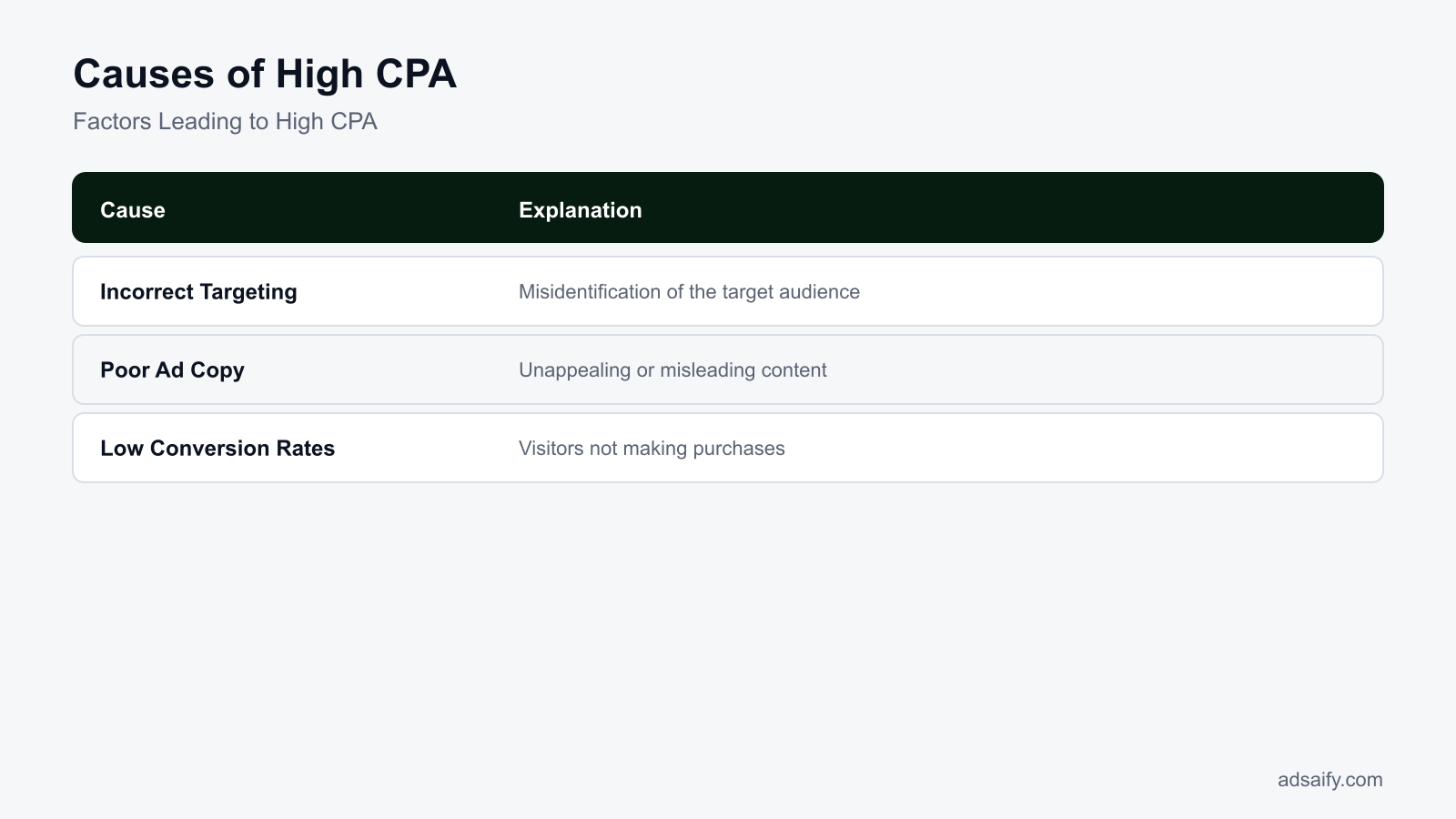
High CPA can stem from various factors, including incorrect targeting, poor ad copy, and low conversion rates. Each of these issues can lead to inefficiencies in your campaigns, causing you to spend more on acquiring customers than necessary. Understanding these causes helps in diagnosing and resolving high CPA problems effectively.
Incorrect targeting
Incorrect targeting occurs when your ads are shown to audiences that are not interested in your product or service. This often leads to low engagement and high CPA. Ensure that your targeting settings in Meta Ads Manager, including demographics, interests, and behaviors, align with your ideal customer profile. Use the audience insights tool to refine your targeting based on performance data.
Poor ad copy
Poor ad copy can fail to engage potential customers, resulting in low click-through rates (CTR) and high CPA. Effective ad copy should clearly convey the value proposition and include a compelling call to action. Analyze the performance of your ad copy in Ads Manager, looking for ads with low CTR and high CPA, and consider A/B testing different versions to identify what resonates best with your audience.
Low conversion rates
Low conversion rates occur when users click on your ads but do not complete the desired action, such as making a purchase or signing up. This can be caused by an unoptimized landing page, unclear messaging, or a complicated checkout process. Regularly review your landing page performance metrics in Ads Manager and consider making adjustments to improve user experience and increase conversions.
| Cause | Symptoms | Possible Solutions |
|---|---|---|
| Incorrect Targeting | High CPA with low engagement metrics | Refine target audience settings |
| Poor Ad Copy | Low CTR and high CPA | A/B test different ad copy |
| Low Conversion Rates | High clicks but low conversions | Optimize landing pages |
| Ad Fatigue | Declining performance over time | Refresh creatives regularly |
| Unclear Value Proposition | Low engagement and interest | Clarify messaging |
How do these causes affect my CPA?
These causes directly impact your CPA by increasing the costs associated with acquiring customers. Incorrect targeting leads to wasted ad spend, poor ad copy reduces engagement, and low conversion rates indicate inefficiencies in the sales funnel. Addressing these issues is vital for improving your CPA and ensuring that your advertising efforts are cost-effective.
What is the Cost of High CPA?
High Cost Per Acquisition (CPA) significantly impacts a business's profitability and growth. The direct costs include reduced profit margins, as acquiring customers becomes more expensive than the revenue generated. Additionally, high CPA can lead to a competitive disadvantage, where businesses struggle to maintain market share. Over time, this may result in long-term customer loss, as potential buyers turn to more cost-effective competitors.Loss of Profit
When CPA is elevated, the profit from each sale diminishes. For example, if a product sells for 1,000 TL and the CPA rises to 600 TL, only 400 TL remains as profit. This scenario becomes unsustainable, especially if fixed costs are high. To maintain profitability, businesses may need to increase prices, which could further alienate customers.Competitive Disadvantage
High CPA can place a company at a disadvantage compared to competitors with lower acquisition costs. Businesses with efficient marketing strategies can afford to spend more on advertising while still maintaining profitability. This leads to increased market share for competitors and can result in a loss of brand recognition and customer loyalty for those struggling with high CPA.Long-term Customer Loss
When a business consistently faces high CPA, it may be forced to cut back on marketing efforts or compromise on product quality. This can lead to a negative perception in the market, driving potential customers away. Over time, loyal customers may also leave for alternatives, resulting in a long-term decline in customer base.- Evaluate your current CPA metrics.
- Calculate the profit margins on your products.
- Analyze your competitors' CPA and pricing strategies.
- Identify potential inefficiencies in your marketing campaigns.
- Review customer feedback and satisfaction surveys.
- Adjust ad targeting to reach more relevant audiences.
- Test different ad creatives and messaging.
- Monitor changes in customer acquisition over time.
What happens if we ignore these costs?
Ignoring the costs associated with high CPA can lead to severe consequences, including financial instability and diminished market presence. Over time, businesses may find themselves unable to compete, resulting in lost sales opportunities and a dwindling customer base. This neglect can erode brand loyalty and significantly hinder long-term growth prospects.How to Diagnose Which Cause Applies?
Diagnosing the cause of high CPA involves a thorough analysis of both audience and competitor performance. Understanding your target audience's behavior and preferences is crucial for identifying potential misalignments in your advertising strategy. A comprehensive competitor analysis helps in recognizing industry benchmarks and performance standards, allowing for more informed decisions.Audience Analysis
Conducting an audience analysis helps identify whether your ads are reaching the right people. Use Meta Ads Manager to access Audience Insights, which provides demographic data, interests, and behaviors of your audience. By comparing this data to your actual customer profiles, you can determine if you're targeting the wrong audience segments.Competitor Analysis
A competitor analysis involves studying the advertising strategies of similar businesses in your market. Tools like the Ad Library in Meta can help you see what ads competitors are running, their messaging, and their engagement levels. This information can highlight areas where your strategy may be lacking or where competitors are outperforming you.How to Differentiate from Competitors?
To stand out, focus on unique selling propositions (USPs) that resonate with your target audience. Analyze competitors’ messaging and identify gaps where you can position your brand effectively. This can involve emphasizing product quality, customer service, or unique features that competitors may overlook.| Analysis Type | Focus Area | Tools | Outcome |
|---|---|---|---|
| Audience Analysis | Demographics & Interests | Meta Ads Manager | Identify target segments |
| Competitor Analysis | Ad Strategies | Ad Library | Benchmark performance |
| Market Trends | Industry Insights | Google Trends | Understand shifts in demand |
| Customer Feedback | Satisfaction Surveys | Survey Tools | Improve product offerings |
What analyses should I conduct?
To effectively diagnose high CPA causes, conduct a thorough audience analysis to ensure your ads target the right demographics. Complement this with a competitor analysis to benchmark your performance against similar businesses. Additionally, review market trends and gather customer feedback to identify areas for improvement, ensuring your strategies are aligned with customer expectations and industry standards.If you would rather not set up each of these steps by hand, try it in Adsaify: your first ad is free, so there is nothing to lose. Create a free account.
What to Prepare and Check Before Applying the Fix?
To effectively address high CPA (cost per acquisition) issues in Meta ads, marketers must conduct a thorough review of existing campaign data, reevaluate audience definitions, and identify competitive pricing strategies. This preparation ensures that any adjustments made will be informed and targeted, ultimately leading to better campaign performance.Review existing campaign data
Begin by examining your current campaign metrics in the Meta Ads Manager. Look for key performance indicators (KPIs) such as CPA, click-through rate (CTR), and return on ad spend (ROAS). Identify trends over time and compare them against benchmarks relevant to your industry. Use the "Breakdown" feature to analyze performance by age, gender, placement, and time to pinpoint areas that may be underperforming.Reevaluate audience definition
Your target audience plays a crucial role in determining CPA. Review the audience settings in your campaigns, including demographics, interests, behaviors, and custom audiences. Ensure that your audience is neither too broad nor too narrow. Utilize the Audience Insights tool to gather data on your audience's preferences and behaviors, which can help refine your targeting. Consider testing different audience segments to identify which ones yield lower CPA.Identify competitive pricing strategies
Understanding your competitive landscape is vital. Research competitors’ pricing strategies to see how your offerings compare. Use the "Ads Library" feature in Meta to view competitor ads and promotions. This insight can inform your own pricing and ad positioning. You might want to consider implementing A/B testing for different pricing strategies to see which resonates best with your audience.- Review current CPA metrics in Ads Manager.
- Analyze CTR and ROAS over the last 30 days.
- Check audience demographics and interests.
- Utilize Audience Insights for deeper understanding.
- Research competitor pricing using Ads Library.
- Test new audience segments for performance.
- Document findings and recommendations for changes.
What data should I gather?
Gather data on your existing CPA, CTR, ROAS, audience demographics, and competitor pricing. Additionally, collect insights from Audience Insights and historical campaign performance metrics. This information will provide a comprehensive understanding of your current situation and help identify the most effective strategies for reducing high CPA.Solution: Steps to Reduce High CPA
To reduce high CPA in Meta ads, marketers should focus on optimizing the target audience, creating competitive ad copy, and improving the conversion funnel. Implementing these strategies ensures that each ad dollar spent is more effective in driving conversions.Optimize the target audience
Start by refining audience targeting based on the insights gathered previously. Adjust demographic settings, interests, and behaviors to ensure alignment with your ideal customer profile. Consider using lookalike audiences to reach users similar to your best customers, which can improve engagement and reduce CPA.Create competitive ad copy
Craft compelling ad copy that speaks directly to your target audience's pain points and needs. Highlight unique selling propositions (USPs) and include strong calls to action (CTAs). Use A/B testing to compare different versions of ad copy and visuals to determine which combination yields the best results.Improve the conversion funnel
Examine the user journey from ad click to conversion. Identify any bottlenecks or points of friction in the conversion funnel, such as slow-loading landing pages or confusing navigation. Optimize landing pages to ensure they are user-friendly and aligned with the ad messaging. Implement retargeting strategies for users who did not convert initially.- Step 1: Refine Audience — Adjust demographics and interests based on insights; leads to Step 2.
- Step 2: Create Ad Copy — Develop compelling ad copy and visuals; leads to Step 3.
- Step 3: A/B Test — Run tests on different ad variations; leads to Step 4.
- Step 4: Analyze Performance — Review results to determine the best-performing ads; leads to Step 5.
- Step 5: Optimize Funnel — Improve landing pages and user experience; leads to Step 6.
- Step 6: Implement Retargeting — Set up campaigns for users who didn’t convert; leads to Step 7.
- Step 7: Monitor CPA — Continuously track CPA and make adjustments as needed.
How long will these steps take?
The time required to implement these steps can vary significantly based on the complexity of your campaigns and available resources. Typically, refining the audience and creating ad copy can take a few days, while A/B testing and optimizing the conversion funnel may require several weeks to gather sufficient data. Continuous monitoring should be an ongoing process to ensure sustained performance improvements.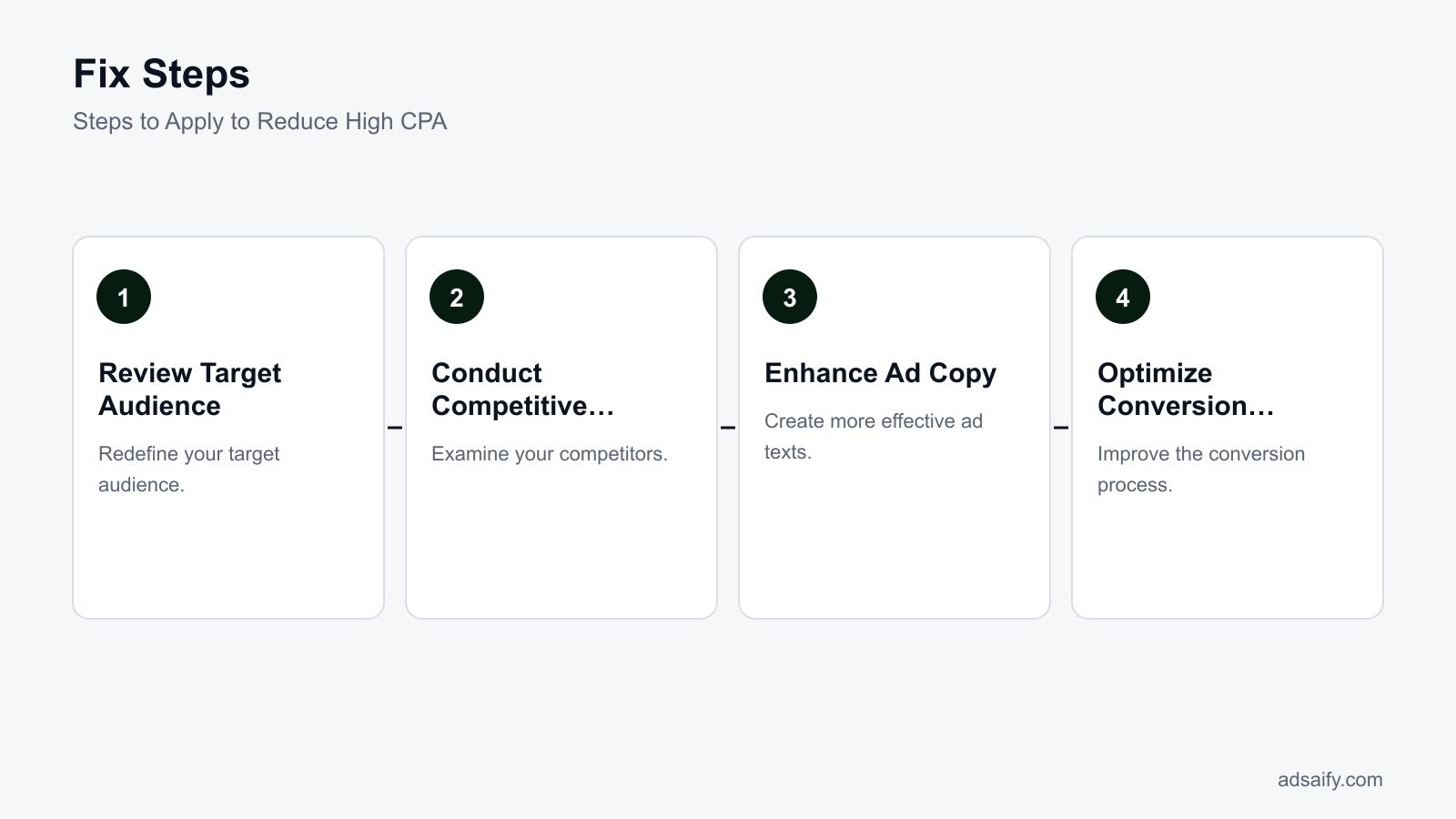
Detailed Example: A Scenario to Reduce High CPA
A sample campaign can illustrate how to effectively reduce high CPA (cost per acquisition). For this example, let's consider a local coffee shop, "Brewed Awakenings," that spends 1,000 TL per week on Meta ads targeting new customers. The initial CPA for this campaign is 150 TL, which is higher than desired. By making specific adjustments, the coffee shop aims to reduce CPA to 100 TL.
Create a Sample Campaign
In Meta Ads Manager, the coffee shop sets up a new campaign with the objective of "Conversions." The campaign is named "New Customer Acquisition." The target audience is defined as people aged 18-35 living within a 10 km radius of the shop. The daily budget is set at 142 TL, which totals approximately 1,000 TL over the week.
Define Audience and Ad Copy
The audience is narrowed down using Meta’s targeting options. Interests such as “Coffee,” “Bakeries,” and “Local Food” are selected to engage potential customers. The ad copy highlights a special offer: "Get a Free Coffee with Any Purchase!" The creative features a high-quality image of the coffee shop's signature drink alongside the offer. The call-to-action button is set to "Shop Now," leading users to a dedicated landing page with a coupon download.
Analyze the Results
After running the campaign for one week, the results show 1,000 clicks and 10 conversions, resulting in a CPA of 100 TL. This is an improvement from the previous CPA of 150 TL. Key metrics to analyze include click-through rate (CTR), which is 10%, and conversion rate, which is 1%. If the campaign hadn’t met the target CPA, further adjustments in targeting, ad copy, or budget allocation could be considered.
How can I use a real example?
Using real examples, like the Brewed Awakenings campaign, helps you understand the practical steps needed to reduce CPA. By analyzing specific metrics and making targeted adjustments, marketers can effectively optimize their campaigns for better performance.
How to Measure Whether the Fix Worked?
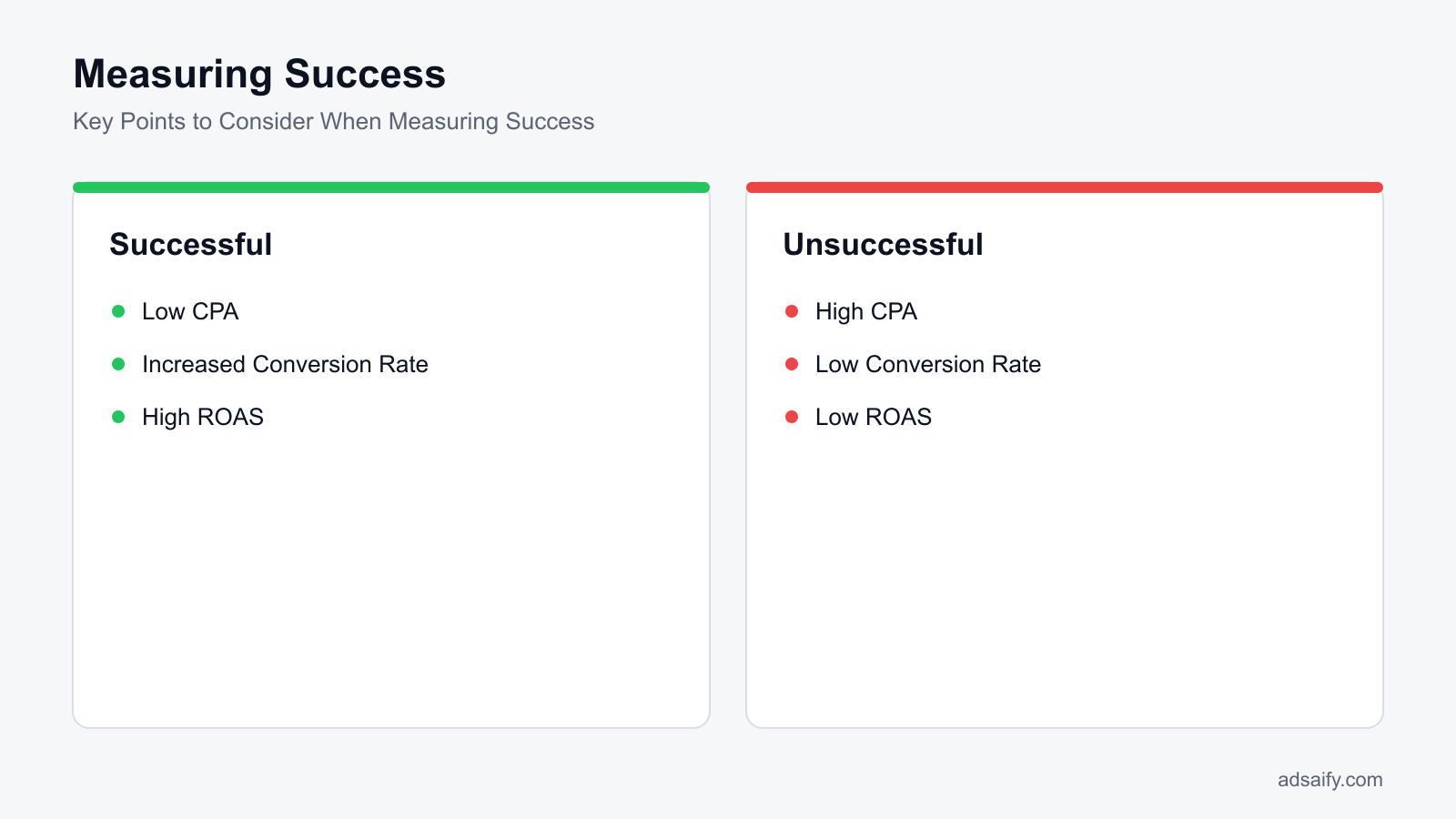
To determine if the changes made to reduce CPA were effective, it’s essential to track CPA changes, analyze conversion rates, and calculate ROAS (Return on Ad Spend). Monitoring these metrics provides a clear picture of campaign performance and profitability.
Track CPA Changes
Start by comparing the CPA before and after the adjustments. This is done by accessing the Ads Manager and looking at the "Performance" column. If the CPA has decreased significantly, it indicates that the changes are having a positive impact.
Analyze Conversion Rates
Next, analyze the conversion rates by checking the "Conversions" column in Ads Manager. A higher conversion rate suggests that the modifications made to the campaign are resonating with the target audience, leading to more successful acquisitions.
Calculate ROAS (Return on Ad Spend)
To calculate ROAS, divide the total revenue generated from the campaign by the total ad spend. For example, if Brewed Awakenings generated 2,000 TL in sales from a 1,000 TL ad spend, the ROAS would be 2.0. This indicates that for every 1 TL spent, 2 TL was earned, signifying a profitable campaign.
| Metric | Before Fix | After Fix |
|---|---|---|
| CPA | 150 TL | 100 TL |
| Conversions | 7 | 10 |
| CTR | 8% | 10% |
| ROAS | 1.5 | 2.0 |
When should I measure success?
Success should be measured after running the campaign for a sufficient time, typically one to two weeks, to gather enough data. Regular monitoring of CPA, conversion rates, and ROAS during this period will help you evaluate the effectiveness of your changes and make further adjustments as necessary.
Want to see this in your own account? Enter your website address and Adsaify drafts the campaign for you. The first ad is free. Try it now or log in.
What Routine Should I Follow to Prevent the Problem from Recurring?
To prevent high CPA (cost per acquisition) issues from recurring in Meta ads, establish a routine that includes regular analyses and updates. A proactive approach ensures you remain competitive, your audience is effectively targeted, and your campaigns are optimized for performance.- Daily: Check ad performance metrics like CTR (click-through rate) and CPC (cost per click) in Ads Manager to quickly identify underperforming ads.
- Weekly: Review audience insights to ensure your target demographics align with your business objectives and adjust accordingly.
- Weekly: Analyze the relevance score of your ads to gauge how well your audience responds to your messaging and visuals.
- Monthly: Conduct a comprehensive campaign analysis to assess overall performance, including CPA, ROAS (return on ad spend), and conversion rates.
- Monthly: Update your target audience based on recent trends and insights, ensuring it reflects your current customer base.
- Monthly: Perform a competitive analysis by reviewing what similar brands are doing in terms of ad creative, messaging, and targeting.
- Quarterly: Reassess your overall ad strategy and budget allocation to ensure alignment with business growth and market changes.
How often should I conduct checks?
Conduct daily checks for immediate performance metrics, weekly reviews for audience insights and ad relevance, and monthly comprehensive analyses. This routine helps maintain campaign effectiveness and allows for timely adjustments, ultimately reducing the risk of high CPA.What are the Most Common Mistakes and How to Fix Them?
Several common mistakes can lead to high CPA in Meta ads, and recognizing these pitfalls is crucial for optimizing your campaigns. Each mistake can be addressed with specific actions to improve ad performance.Not narrowing down the audience
Failing to narrow down the target audience can lead to wasted ad spend on users who are unlikely to convert. To fix this, utilize the detailed targeting options in Ads Manager to specify interests, behaviors, and demographics that align closely with your ideal customer profile.Ignoring competition
Neglecting to analyze competitor strategies can leave your ads stagnant and less appealing. Conduct regular competitive analyses by reviewing competitors' ad creatives and messaging. Use tools like the Facebook Ad Library to understand what is working for them and adjust your strategy accordingly.Using poor ad copy
Weak or unclear ad copy can result in low engagement and high CPA. Ensure your messaging is compelling, concise, and includes a clear call to action. Test different variations of ad copy using A/B testing in Ads Manager to identify what resonates best with your audience.Not utilizing retargeting
Failing to retarget users who have previously engaged with your brand can limit conversion opportunities. Implement retargeting campaigns to reach users who have visited your website or interacted with your content, reminding them of your offerings and encouraging them to convert.Infrequent performance reviews
Not regularly reviewing ad performance can lead to missed opportunities for optimization. Set a routine for analyzing key performance indicators (KPIs) like CPA and CTR. If an ad is underperforming, make data-driven decisions to pause or adjust the campaign.Overlooking ad placement options
Using automatic placements without considering performance differences can lead to inefficiencies. Analyze which placements yield the best results and consider manually selecting placements in Ads Manager to optimize ad delivery.Neglecting audience feedback
Ignoring audience feedback can result in stagnant ad performance. Monitor comments and reactions to your ads, and adjust your messaging or targeting based on audience sentiments to enhance engagement and conversion rates.How can I avoid these mistakes?
To avoid common mistakes, establish a routine for audience targeting, competitive analysis, and performance reviews. Regularly test and optimize ad copy while actively seeking audience feedback. By staying informed and proactive, you can significantly reduce the risk of high CPA and improve overall ad effectiveness.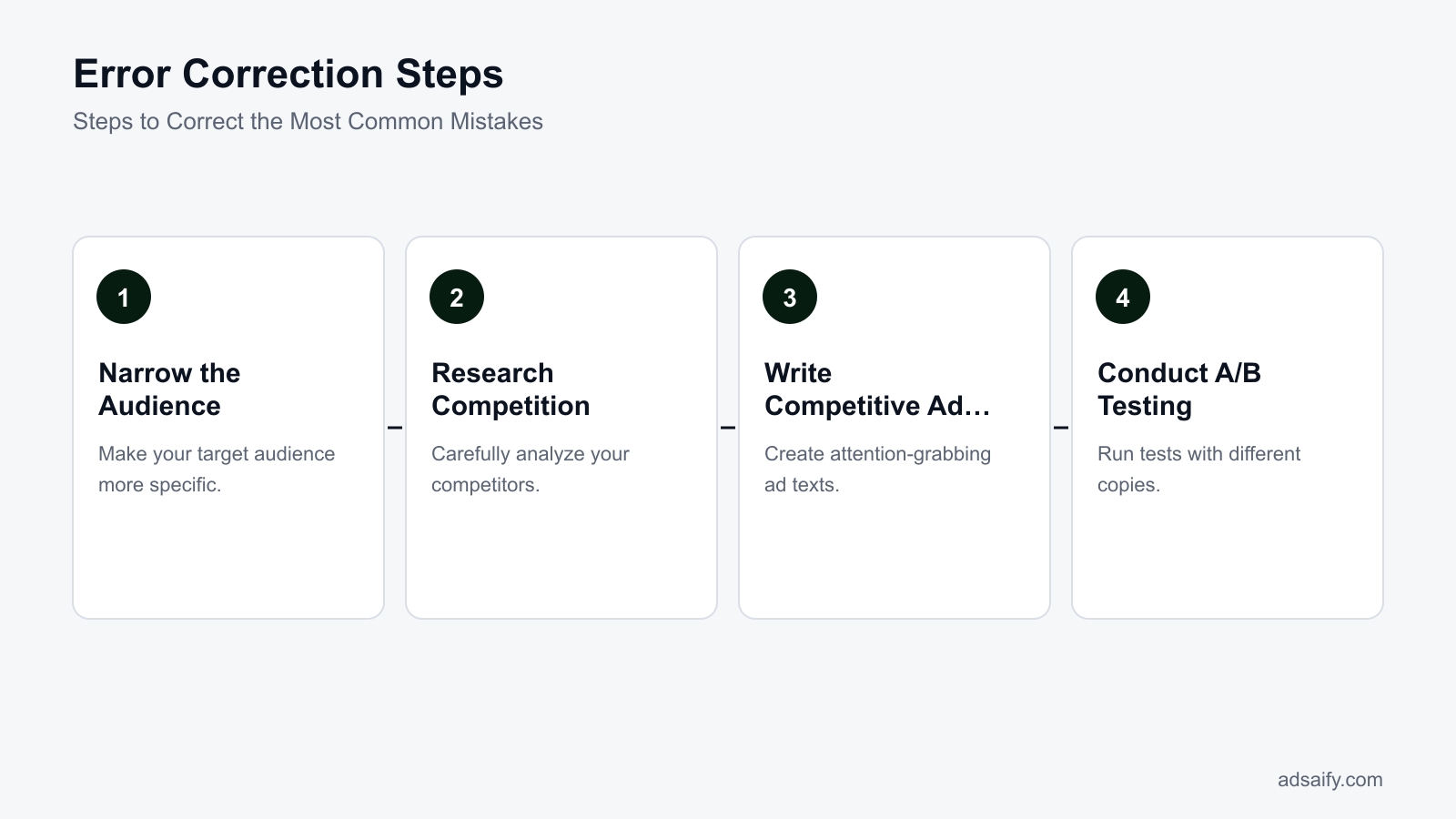
What to Do When the Fix Doesn’t Help?
When initial strategies to reduce high CPA (Cost Per Acquisition) do not yield desired results, marketers should explore alternative approaches. This includes trying different strategies, creating new audience definitions, and reassessing the campaign budget. Each of these steps can help identify fresh opportunities for improvement.Try Different Strategies
Experimenting with various strategies is essential when previous fixes fail. Marketers can test different ad formats, such as video ads, carousel ads, or collection ads, which may resonate better with the audience. Additionally, consider adjusting the bidding strategy in Meta Ads Manager. Switching from automatic bidding to manual bidding can provide more control over costs. 1. Navigate to your campaign in Meta Ads Manager. 2. Select the “Ad Set” level, and look for the “Bidding” section. 3. Choose “Manual” bidding and set a maximum bid limit that reflects your target CPA.Create New Audience Definitions
Creating new audience definitions can help reach untapped segments that may convert at a lower CPA. Use Meta’s audience insights to refine targeting based on demographics, interests, and behaviors. Additionally, consider creating lookalike audiences based on your highest-value customers. 1. Go to the “Audience” section in Ads Manager. 2. Click on “Create Audience,” and select “Lookalike Audience.” 3. Choose a source audience (e.g., your website visitors or customer list) and specify the audience size.Reassess Campaign Budget
Sometimes, the campaign budget may need adjustment to improve performance. Increasing the budget can allow for more data collection and reach, helping to optimize ad delivery. Conversely, if the budget is too high and causing inefficient spending, consider reducing it to focus on the highest-performing ads. 1. In Ads Manager, select your campaign and navigate to the “Budget” section. 2. Adjust the daily or lifetime budget based on performance metrics and CPA goals.- Review audience insights and demographics.
- Test different ad formats for engagement.
- Adjust bidding strategies in Ads Manager.
- Create lookalike audiences for targeting.
- Reassess and modify your campaign budget.
- Analyze ad copy and creative for relevance.
- Utilize A/B testing to refine ads further.
- Monitor performance metrics weekly for trends.
What alternative strategies could there be?
Alternative strategies include leveraging retargeting ads to engage users who have previously interacted with your brand. Additionally, collaborating with influencers or using user-generated content can enhance authenticity and drive conversions. Experimenting with seasonal promotions or limited-time offers can also create urgency and attract more potential customers.Key Terms: CPA and Others
Understanding key terms is crucial for navigating Meta Ads effectively. CPA (Cost Per Acquisition) refers to the cost incurred for acquiring a customer through advertising. Knowing terms like ROAS (Return on Ad Spend) helps marketers assess the effectiveness of their campaigns. Familiarity with these terms enhances strategic decision-making and campaign optimization.- CPA: Cost incurred for acquiring a customer through advertising.
- ROAS: Return on ad spend, measuring revenue generated for every dollar spent on advertising.
- Target Audience: The specific group of consumers a marketer aims to reach with their ads.
- Ad Set: A group of ads within a campaign targeting a specific audience or objective.
- Lookalike Audience: A targeting option that allows advertisers to reach new people similar to their existing customers.
- Manual Bidding: A bidding strategy where advertisers set a maximum bid for their ads.
- Ad Format: The type of advertisement, such as image, video, or carousel.
- A/B Testing: A method of comparing two versions of an ad to determine which performs better.
- Budget: The total amount allocated for a campaign or ad set.
- Performance Metrics: Data points used to assess the effectiveness of ads, such as CTR (Click-Through Rate).
- Retargeting Ads: Ads aimed at users who have previously interacted with a brand.
- Conversion Rate: The percentage of users who complete a desired action after clicking an ad.
Why are these terms important?
These terms are essential for marketers to understand because they provide a common language for discussing campaign performance and strategy. Mastery of these concepts enables marketers to make informed decisions, optimize campaigns effectively, and ultimately achieve better results. Understanding these terms can lead to more successful advertising efforts and improved ROI.Conclusion: Strategies to Reduce High CPA
To address high CPA issues effectively, first analyze your audience and ad performance. Next, optimize your ad creatives and experiment with different bidding strategies. Regularly monitor your campaigns and adjust your budget based on performance. A concrete step to take today is to assess your current campaigns and identify areas for improvement using an AI tool like Adsaify.
Want to see this in your own account? Enter your website address and Adsaify drafts the campaign for you. The first ad is free. Try it now or log in.
Frequently Asked Questions (FAQ)
1. How long does it take to reduce high CPA?
Reducing high CPA typically takes a few weeks to a couple of months, depending on the changes made to your ad strategy. Regular monitoring and optimization of your campaigns are essential. Implementing new targeting or creative strategies can lead to quicker improvements, but consistent adjustments will yield the best long-term results.
2. What should I do if my audience is small?
If your audience is small, consider expanding your targeting options by including broader demographics or interests. You can also create lookalike audiences based on existing customers or engage in remarketing campaigns. Using AI tools like Adsaify can help identify potential audience segments to target more effectively.
3. What happens if my conversion rate is low?
A low conversion rate indicates that users are not taking the desired actions after clicking your ads. This could be due to irrelevant targeting, poor ad creatives, or a confusing landing page. To improve conversion rates, analyze your ad copy and landing page for clarity and relevance, and consider A/B testing different elements.
4. What should I do if my competition is high?
If competition is high, consider differentiating your ad creatives and value propositions to stand out. You can also adjust your bidding strategy, focusing on less competitive keywords or audience segments. Utilizing tools like Adsaify can help you refine your approach and optimize your campaigns in a competitive landscape.
5. How can I optimize my budget?
To optimize your budget, regularly review your ad performance metrics to identify low-performing ads and pause them. Allocate more budget to high-performing campaigns, and experiment with different bidding strategies. Utilize automation rules to manage your budget effectively, ensuring funds are directed toward the best-performing ads.
6. How do I measure the effects of high CPA?
To measure the effects of high CPA, track key performance indicators (KPIs) such as conversion rate, return on ad spend (ROAS), and click-through rate (CTR). Regularly analyze these metrics to understand how changes in your ad strategy impact CPA over time. Use analytics tools to gain insights into audience behavior and ad performance.
7. What are the best tools to manage high CPA?
The best tools to manage high CPA include ad management platforms like Adsaify, which offers campaign automation and performance analysis. Other useful tools are analytics platforms for tracking KPIs, A/B testing tools for optimizing creatives, and audience analysis tools for refining targeting strategies. These tools help streamline campaign management and improve performance.
8. How much budget should I allocate to implement these strategies?
The budget allocation for implementing strategies to reduce high CPA depends on your overall advertising budget and goals. A good starting point is to allocate 10-20% of your total ad budget to testing new strategies and optimizing campaigns. Adjust this percentage based on the performance and insights gained from your campaigns.
How can you try this with Adsaify?
The quickest way to apply the steps in this article to your own account is to try them. Adsaify analyses your business from your website address, drafts the campaign with an audience, ad copy, creative and a budget suggestion, and publishes it to your own Meta ad account once you approve.
- Your first ad is free: there is nothing to lose by trying.
- Your own ad account: the campaign runs in your Meta account and you stay in control.
- Images and video: generate ad creatives with AI or promote an existing Instagram post.
Create a free account and try your first ad · Already have an account? Log in.