Short answer: Creative fatigue in Meta ads occurs when consumers repeatedly encounter the same content. This leads to decreased click-through rates and negatively impacts conversion rates.
Many marketers running Meta ads face a frustrating challenge known as creative fatigue. You may have experienced a situation where your ads, once effective, start to lose their impact. Your audience, having seen the same visuals and messages repeatedly, begins to ignore them, resulting in declining click-through rates and stagnant conversions. This not only wastes your advertising budget but also diminishes overall campaign performance. Creative fatigue often arises from a lack of fresh content, overexposure to the same ads, or ineffective targeting strategies. When left unaddressed, this issue can lead to significant financial losses and missed opportunities. As your audience becomes desensitized to your ads, your return on ad spend (ROAS) suffers, meaning you are not getting the desired value from your investment. Ignoring this problem can create a cycle of diminishing returns that hampers your marketing efforts. In this article, you will learn how to recognize and diagnose creative fatigue, understand its causes, and implement effective strategies to rejuvenate your ad campaigns. We will cover essential steps to prepare for changes, how to measure the effectiveness of your solutions, and establish routines to prevent creative fatigue from recurring. By the end, you will have a comprehensive toolkit to keep your campaigns vibrant and engaging.Key Takeaways
- Creative fatigue reduces conversions.
- Using innovative content is crucial.
- AI tools can speed up content changes.
- Regular analysis and optimization are essential.
What is creative fatigue and how to recognize it?
Creative fatigue occurs when an ad's effectiveness diminishes due to the repeated use of the same content. This leads to declining click-through rates (CTR) and decreased audience engagement. For example, a local coffee shop running a campaign with a 500 TL daily budget may notice that their CTR drops from 3% to 1.5% after three weeks of using the same ad creatives. The audience, having seen the same visuals and messaging, becomes less responsive, indicating creative fatigue. Monitoring performance metrics in Meta Ads Manager is crucial for identifying these trends.Declining click-through rates
Declining click-through rates (CTR) serve as a key indicator of creative fatigue. When ads consistently show lower CTRs, it suggests that the audience is no longer interested in the content being presented. For instance, a fitness studio may see their CTR drop from 4% to 1.2% over a month, indicating that the same promotional video is no longer engaging. In Meta Ads Manager, check the "Ads Reporting" section, focusing on the "Performance" metrics to track CTR. If the CTR falls below the industry benchmark for your sector, it’s a clear sign of fatigue.Decreased audience engagement
Decreased audience engagement can also signal creative fatigue. Engagement includes likes, shares, and comments on your ads. If an ad that previously garnered significant interaction suddenly receives minimal engagement, it indicates that the audience is losing interest. For example, a clothing brand may experience a drop in comments from 300 to 50 on a repeated ad campaign. Monitoring the "Engagement" metrics in the "Ads Manager" can help assess this. A consistent decline in interaction rates suggests that it might be time to refresh your creatives.How can I identify creative fatigue?
To identify creative fatigue, regularly analyze ad performance metrics in Meta Ads Manager, focusing on CTR, engagement rates, and conversion rates. Set thresholds for acceptable performance; for example, a drop in CTR below 2% or engagement rates falling by over 30% compared to previous campaigns can indicate that your ad creatives need to be updated.What causes creative fatigue?
Creative fatigue is primarily caused by the frequent use of the same content, changing audience expectations, and insufficient content diversity. When ads are shown repeatedly without variation, audiences become desensitized. Additionally, audience preferences evolve, necessitating fresh content to maintain engagement. The lack of diverse ad formats or messaging can also contribute to fatigue, making it essential for marketers to adapt their strategies.Frequent use of the same content
Frequent use of the same content is a primary cause of creative fatigue. When ads are shown repeatedly without variation, users become accustomed to them, leading to decreased effectiveness. For example, a tech company running the same product ad for a month may find that initial engagement wanes significantly. To avoid this, marketers should implement a rotation of creatives every two weeks to keep the audience engaged.Changing audience expectations
Changing audience expectations can also lead to creative fatigue. As trends and consumer preferences evolve, what was once engaging may no longer resonate. For instance, if a travel agency continues to use the same picturesque beach imagery while audiences are now seeking adventure travel experiences, the ad will likely underperform. Regularly updating creatives to reflect current trends is crucial for maintaining relevance.Insufficient content diversity
Insufficient content diversity is another major factor contributing to creative fatigue. When ads lack variety in formats—such as static images, videos, and carousels—audiences may lose interest. The table below compares different ad formats and their effectiveness in engaging audiences:| Ad Format | Engagement Level | Use Frequency | Ideal Duration |
|---|---|---|---|
| Static Image | Medium | 2 weeks | 1-2 weeks |
| Video | High | 1 week | 1-3 weeks |
| Carousel | High | 2 weeks | 2-4 weeks |
| Slideshow | Medium | 1 week | 1-2 weeks |
Why aren’t the same contents working?
The same contents may not be working due to audience desensitization, changing preferences, or an oversaturation of similar messages. If ads lack freshness or relevance to current trends, engagement will decline. Regularly refreshing ad creatives and diversifying formats are essential strategies to combat this issue and maintain audience interest.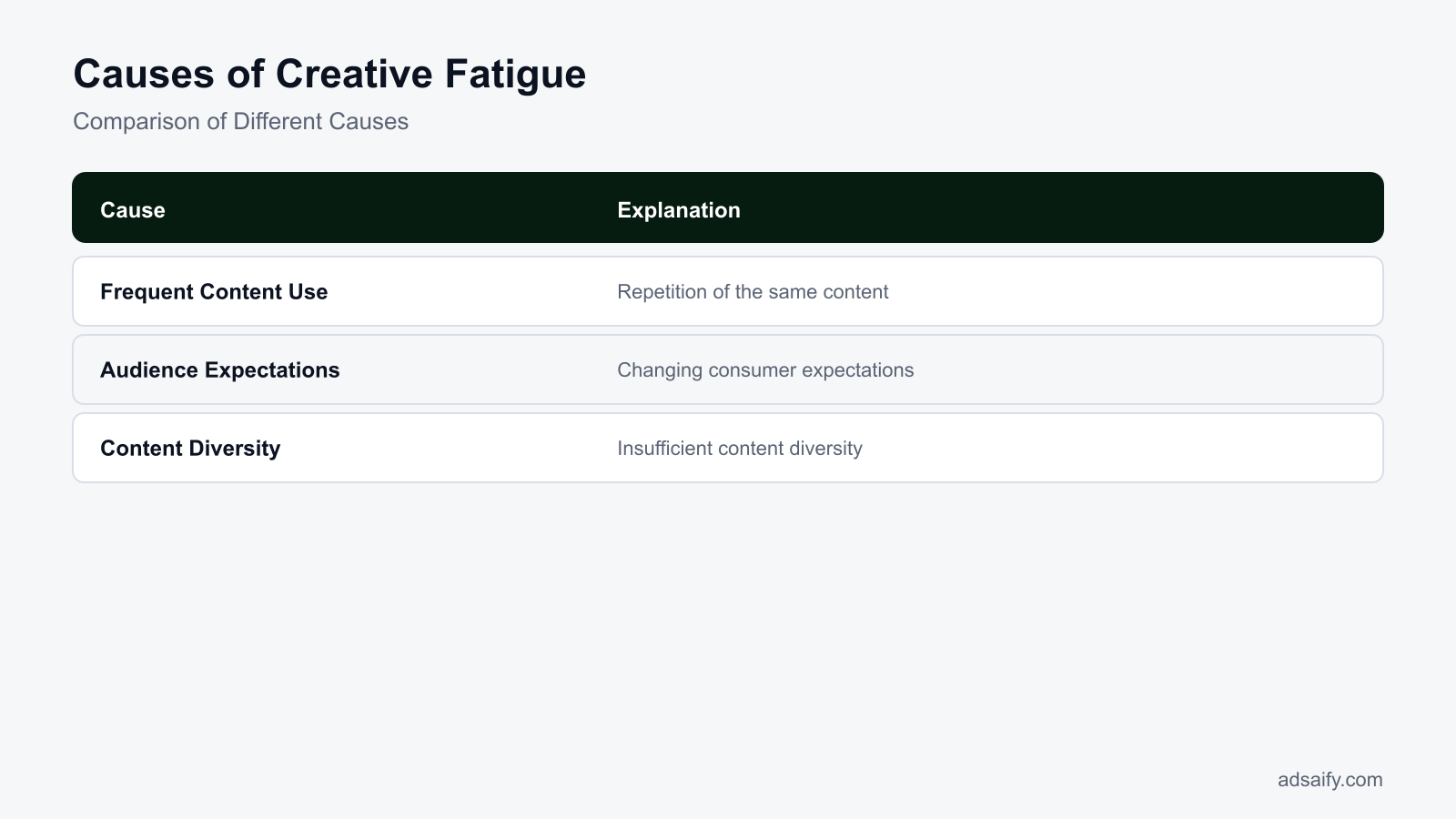
What is the cost of ignoring creative fatigue?
Ignoring creative fatigue can lead to several negative consequences for your Meta ad campaigns. A decline in click-through rates (CTR) occurs, resulting in lower engagement with your ads. This leads to increased costs per click (CPC) as the ad platform adjusts to maintain visibility. Ultimately, these factors contribute to decreased conversion rates, which can significantly impact your return on ad spend (ROAS).Low click-through rates
When creative fatigue sets in, audiences become desensitized to your ads. This desensitization results in lower click-through rates. For example, if your CTR drops from 2% to 0.5%, it indicates that fewer users are engaging with your content. You can track this metric in the Meta Ads Manager under the "Performance" section. A sustained low CTR can signal that it's time to refresh your creatives.Increased costs
As click-through rates decline, the cost of acquiring clicks rises. The Meta advertising algorithm prioritizes ads that generate higher engagement, meaning your ads may need to spend more to reach the same audience. For example, if your CPC goes from 1 TL to 5 TL, your overall campaign budget can quickly become strained. To monitor these costs, regularly check the "Cost Per Result" metric in your campaign reports.Decreased conversion rates
Creative fatigue not only affects initial engagement but also leads to lower conversion rates. When users see the same ad repeatedly without any variation, they are less likely to take action, such as making a purchase or signing up for a newsletter. If your conversion rate drops from 5% to 2%, this decrease directly impacts your revenue and overall campaign effectiveness. Use the "Conversion" metrics in the Meta Ads Manager to track this important figure.- Monitor click-through rates regularly.
- Analyze cost per click trends.
- Evaluate conversion rates consistently.
- Refresh ad creatives every few weeks.
- Test different audience segments.
- Adjust targeting parameters based on performance.
- Use automation rules to pause underperforming ads.
- Review ad fatigue indicators in Meta Ads Manager.
What happens if we ignore creative fatigue?
Ignoring creative fatigue can lead to a downward spiral in ad performance, resulting in wasted budget and missed opportunities. As engagement declines, your costs rise, and conversions drop, ultimately harming your overall marketing objectives. Consistent monitoring and adaptation are crucial to maintain ad effectiveness and achieve your desired outcomes.How can I diagnose the cause of creative fatigue?
Diagnosing the cause of creative fatigue involves a systematic approach to understanding ad performance and audience interactions. By analyzing content performance, collecting audience feedback, and conducting A/B tests, marketers can pinpoint the underlying issues affecting ad effectiveness.Analyze content performance
Begin by examining the performance of your existing ads in the Meta Ads Manager. Look for trends in engagement metrics such as impressions, clicks, and conversions. Compare these metrics over time to identify when performance begins to decline. For instance, if an ad that previously had a CTR of 3% drops to 1%, it may indicate that the creative is becoming stale. Use the "Breakdown" feature to see how different demographics respond to your ads.Collect audience feedback
Engaging directly with your audience can provide valuable insights into their perceptions of your ads. Consider using polls or surveys on your social media channels to gather feedback on what resonates with them. Ask questions about the ad content, visuals, and messaging. This qualitative data can help you identify specific elements that may be contributing to creative fatigue.Conduct A/B tests
A/B testing is a powerful method to diagnose creative fatigue. Create variations of your ads by altering one element at a time, such as the image, headline, or call-to-action. Monitor the performance of each variant to determine which resonates better with your audience. For example, if you test two different headlines and one generates a significantly higher CTR, you can conclude that the original headline was less effective.| Method | Advantages | Disadvantages | Best Use Case |
|---|---|---|---|
| Content Analysis | Identifies trends over time | May not explain why | Long-term performance evaluation |
| Audience Feedback | Direct insights from users | May be biased | Understanding audience preferences |
| A/B Testing | Data-driven decisions | Requires time and resources | Testing specific ad elements |
| Engagement Metrics | Quantifies performance | Limited to numerical data | Overall ad effectiveness |
Which metrics should I check?
When diagnosing creative fatigue, focus on key metrics such as click-through rates (CTR), cost per click (CPC), conversion rates, and engagement rates. Regularly reviewing these metrics will help you identify performance trends and determine whether creative fatigue is affecting your campaigns. For instance, a significant drop in CTR or an increase in CPC can indicate that your ad creatives need refreshing.If you would rather not set up each of these steps by hand, try it in Adsaify: your first ad is free, so there is nothing to lose. Create a free account.
What should I prepare before applying the fix?
Before applying fixes to address creative fatigue in Meta ads, marketers should prepare by generating new content ideas, updating target audiences, and planning innovative content types. This preparation ensures that the new creative assets resonate with the audience and effectively combat fatigue.
Generate new content ideas
Generating new content ideas involves brainstorming fresh concepts that align with your brand and audience interests. Consider utilizing tools like Google Trends or social media listening tools to identify trending topics. Engage your team in creative sessions or use customer feedback to inspire new angles. For instance, if your product is a skincare line, explore themes such as seasonal skincare routines or user-generated content showcasing real results.
Update the target audience
Updating the target audience is crucial in addressing creative fatigue. In Meta Ads Manager, navigate to the audience section of your campaign settings. Analyze performance data to identify underperforming segments and consider expanding or refining your audience. For example, if your ads are primarily targeting women aged 18-34, consider adding a new audience segment of men or older demographics who may also be interested in your product.
Plan innovative content types
Planning innovative content types can reinvigorate your advertising strategy. Explore various formats such as video ads, carousel ads, or interactive polls to keep the audience engaged. Utilize Meta's creative tools to produce high-quality visuals and compelling copy. For example, launch a carousel ad that highlights different product benefits, encouraging users to swipe through each feature, or create video tutorials that showcase your product in action.
- Brainstorm fresh content ideas
- Analyze audience insights in Ads Manager
- Refine target audience parameters
- Explore new ad formats for engagement
- Gather user-generated content for authenticity
- Collaborate with influencers for fresh perspectives
- Set timelines for content production
- Evaluate competitor strategies for inspiration
What resources do I need for new content?
To create new content, you will need resources such as graphic design tools (like Canva or Adobe Creative Suite), video editing software (like Final Cut Pro or Adobe Premiere), and access to stock photo libraries for high-quality images. Additionally, consider using AI tools like Adsaify to help generate ad copy and creative assets tailored to your audience.
How can I solve creative fatigue?
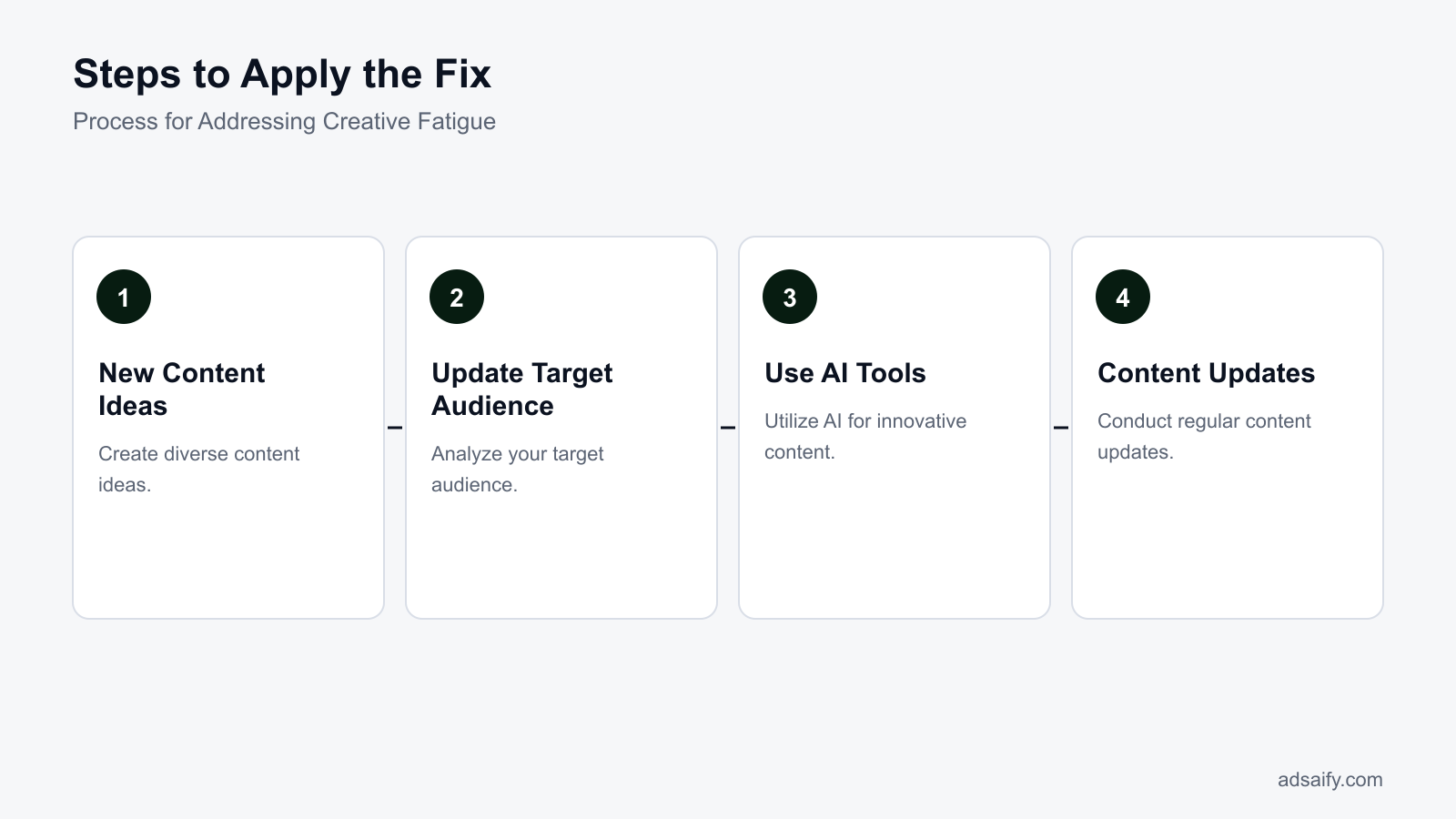
Solving creative fatigue involves creating innovative content, using AI tools for efficiency, and conducting regular content updates. These actions help refresh your advertising strategy and maintain audience engagement over time.
Create innovative content
Creating innovative content is essential for combating creative fatigue. Focus on storytelling, unique visuals, and engaging formats that resonate with your audience. Experiment with different themes, such as behind-the-scenes looks or customer testimonials, to provide fresh perspectives. Additionally, regularly assess performance metrics in Meta Ads Manager to identify which types of content generate the best engagement and conversion rates.
Use AI tools
Using AI tools can streamline the content creation process and inspire fresh ideas. Adsaify, for example, can analyze your website and suggest tailored ad campaigns, including audience targeting and creative recommendations. Leverage AI-generated visuals and ad copy to maintain a consistent flow of new content while saving time on manual creation. This allows for rapid testing and iteration based on audience responses.
Conduct regular content updates
Conducting regular content updates is vital to keep your ads relevant. Schedule monthly reviews of your ad performance in Meta Ads Manager to identify underperforming creatives. Use this data to refresh your ads, either by updating the visuals, tweaking the copy, or changing the call-to-action. Establish a content calendar that includes planned updates to ensure your ads remain fresh and engaging.
- Analyze Current Ads — Review performance metrics in Meta Ads Manager to identify ads suffering from creative fatigue.
- Brainstorm New Ideas — Gather your team to generate fresh content concepts that align with audience insights.
- Create New Assets — Use design tools and AI solutions to produce high-quality visuals and compelling ad copy.
- Test New Content — Launch new ads to a segment of your audience to gauge performance and engagement.
- Evaluate Results — Analyze performance metrics to determine which new creatives resonate best.
- Iterate Based on Feedback — Make adjustments to the content based on audience engagement and feedback.
- Implement Regular Updates — Schedule ongoing reviews to ensure your ads remain fresh and effective.
How can I speed up this process?
To speed up the process of solving creative fatigue, consider establishing a content creation workflow that includes designated roles for team members, utilizing templates for ad designs, and leveraging automation tools like Adsaify for campaign management. Setting clear deadlines and using project management software can also help streamline the process and maintain momentum in your advertising efforts.
How can I measure if the solution worked?
Monitoring the effectiveness of a solution to creative fatigue involves tracking specific metrics in Meta Ads Manager. Key indicators include click-through rates (CTR), conversion rates, and overall campaign performance. Adjustments can be assessed by comparing these metrics before and after implementing changes to your ad creatives or targeting strategies.Monitor click-through rates
Click-through rate (CTR) is a crucial metric that indicates how effectively your ad captures attention. To monitor CTR, navigate to the "Ads Reporting" section in Meta Ads Manager. Here, you can filter results by date to compare performance over time. A healthy CTR typically ranges from 0.5% to 3% depending on the industry. For example, if a local bakery's ad had a CTR of 1.5% before refreshing its creatives and increased to 2.5% afterward, this would suggest the new creatives are resonating better with the audience.Observe conversion rates
Conversion rate measures the percentage of users who take a desired action, such as making a purchase or signing up for a newsletter. You can find this metric in the "Conversions" section of Meta Ads Manager. To analyze the impact of your changes, compare conversion rates before and after the implementation. For instance, if a clothing retailer had a conversion rate of 2% prior to refreshing its ad creatives and saw an increase to 4% post-update, this indicates the changes effectively drove user engagement and actions.Analyze campaign performance
Campaign performance analysis involves looking at the overall results of your advertising efforts. In Meta Ads Manager, go to the "Campaigns" tab to see metrics like total spend, impressions, and reach. For a practical example, consider a fitness studio that allocated a budget of 1,000 TL for a month-long campaign. If the original campaign garnered 20,000 impressions and 50 sign-ups, but after changing the creatives and targeting, it achieved 30,000 impressions and 90 sign-ups, the analysis would show a significant improvement in performance.Which metrics provide the best insights?
The best insights come from a combination of click-through rates, conversion rates, and overall campaign performance metrics. Analyzing these together allows you to understand not just how many people are engaging with your ads, but also how effectively those engagements translate into desired actions, such as sales or leads.What routines should I implement to avoid this issue again?
Implementing routines to prevent creative fatigue is essential for sustained campaign success. Regular content updates, performance analyses, and innovative content strategies should be integral parts of your marketing process. These routines help keep your audience engaged and can significantly improve ad performance over time.Conduct regular content updates
Regular content updates involve refreshing your ad creatives and copy to maintain audience interest. Schedule a bi-weekly review of your current ads to assess which ones are underperforming. Replace low-performing ads with new designs or messages based on current trends or seasonal themes.Perform performance analyses
Conducting performance analyses involves systematically reviewing ad metrics to identify patterns or issues. Set a monthly schedule to analyze key performance indicators (KPIs) such as CTR, conversion rates, and return on ad spend (ROAS). This routine helps to identify any signs of creative fatigue early.Develop innovative content strategies
Developing innovative content strategies can keep your ads fresh and appealing. Experiment with different ad formats such as video, carousel, or story ads. Consider audience segmentation to tailor content specifically for different demographics, which can enhance engagement rates.| Routine | Description | Frequency | Expected Outcome |
|---|---|---|---|
| Content Updates | Refreshing ad creatives and copy | Every 2 weeks | Increased engagement |
| Performance Analyses | Reviewing key metrics | Monthly | Identifying trends |
| Innovative Strategies | Experimenting with new formats | Quarterly | Enhanced creativity |
| Audience Segmentation | Tailoring content for demographics | Ongoing | Improved relevance |
How can I create my routine?
To create your routine, start by scheduling regular intervals for content updates, performance analyses, and strategy development. Utilize a project management tool to set reminders and track progress. Consistency is key; ensure that your team adheres to these scheduled reviews to maintain fresh content and optimize ad performance effectively.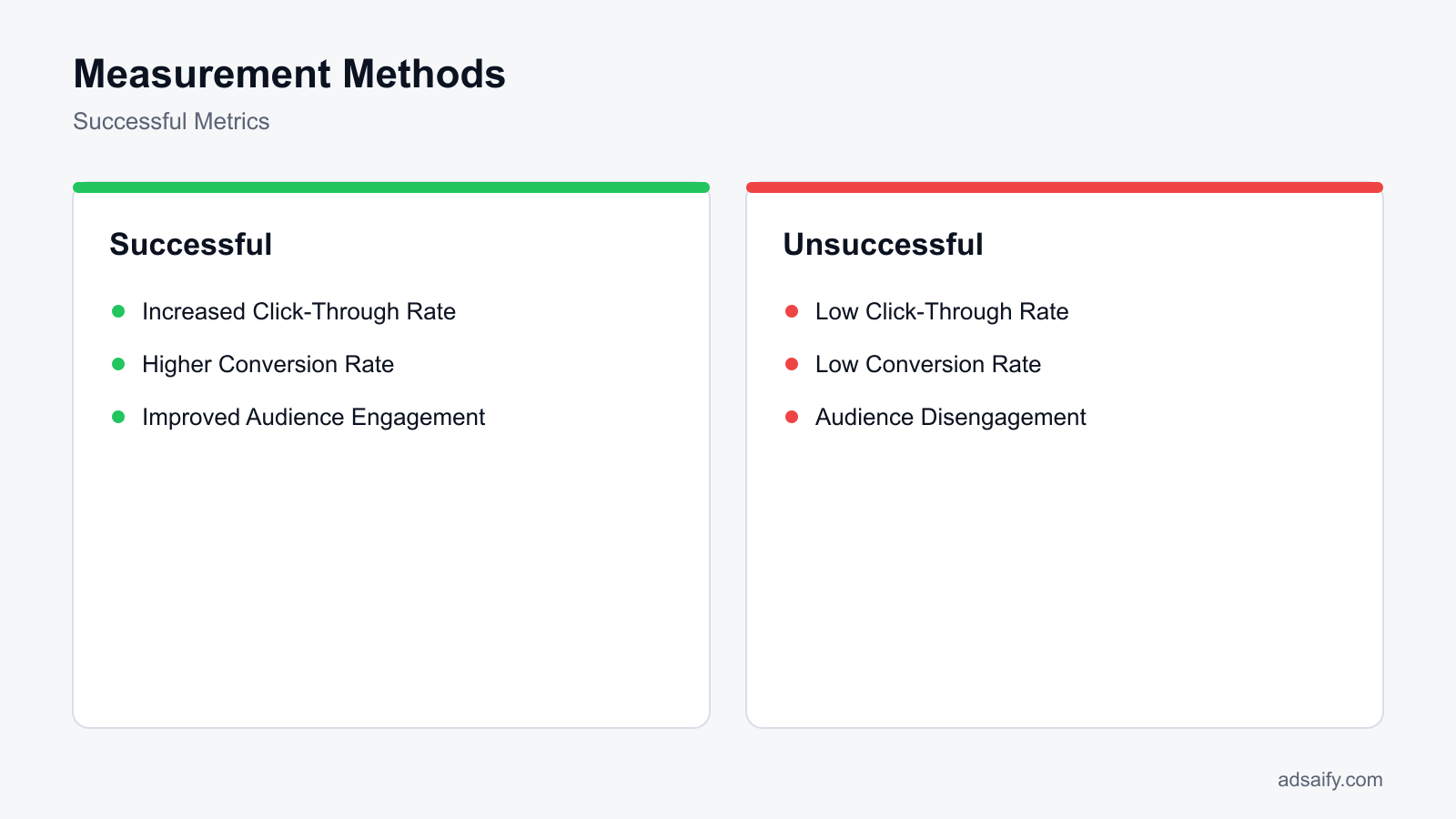
Want to see this in your own account? Enter your website address and Adsaify drafts the campaign for you. The first ad is free. Try it now or log in.
What are the common mistakes and how to fix them?
Creative fatigue can often stem from several common mistakes that advertisers make in Meta Ads. Recognizing and addressing these errors is crucial to maintaining effective ad performance. The three primary mistakes include ignoring content diversity, insufficient audience analysis, and producing low-quality content.Ignoring content diversity
Failing to incorporate a variety of creative formats and messages leads to audience disengagement. When your ads look and feel the same over time, users may begin to overlook them. To fix this, implement a strategy that includes different types of creatives such as images, videos, carousels, and slideshows. Regularly refreshing your content can keep your audience engaged and interested.Not analyzing the target audience enough
Another mistake is not conducting thorough audience analysis. Meta Ads Manager provides insights into audience demographics, interests, and behaviors. If you don’t leverage these insights, your ads may not resonate with your intended audience. Utilize the Audience Insights tool to refine your targeting based on performance data. Test different audience segments to see which ones yield the best results.Creating low-quality content
Low-quality content can significantly reduce ad effectiveness. Ads that are poorly designed or have unclear messaging fail to capture attention. To remedy this, invest time in creating high-quality visuals and compelling copy. Use tools like Adsaify to generate engaging ad creatives that align with your brand’s voice and message.- Daily check ad performance metrics in Meta Ads Manager to identify underperforming ads.
- Weekly review audience insights to adjust targeting strategies based on recent data.
- Weekly rotate creatives to maintain content diversity and engagement levels.
- Monthly conduct a competitive analysis to understand trends and shifts in your industry.
- Monthly gather feedback from your audience to improve ad quality and relevance.
- Monthly audit your ad content for clarity and quality, ensuring messaging aligns with your objectives.
How can I prevent these mistakes?
To prevent common mistakes in Meta advertising, establish a routine for regular content audits, audience analysis, and creative updates. Consistently monitor ad performance metrics and adapt your strategy based on what resonates with your audience. Incorporate feedback loops to refine your approach continually.What if the solution doesn’t work?
If the solutions implemented to address creative fatigue do not yield results, it may be necessary to explore alternative strategies. This involves trying different creative approaches, experimenting with various content types, and reassessing your target audience for better alignment with your ads.Try another strategy
Implementing a different strategy can reinvigorate your ad performance. If a particular ad set is underperforming, consider changing the campaign objective, such as shifting from brand awareness to conversions. This change could provide fresh insights and better engagement from your audience.Explore different content types
Using only one type of content, like static images, can lead to fatigue. To fix this, experiment with video ads, carousel ads, or user-generated content. Each format has its strengths and can appeal to different segments of your audience, potentially increasing engagement.Reassess the target audience
If your ads are not resonating, it may indicate that the target audience is misaligned. Use Meta's Audience Insights to analyze the demographics and behaviors of your current audience. Create new audience segments based on this analysis and test your ads with these refreshed targets.Low engagement rates
A common mistake is ignoring engagement rates. If your ads have low engagement, it indicates a disconnect with your audience. To fix this, analyze the ad copy and visuals for clarity and appeal. A/B testing different variations can help identify what resonates best.High frequency
High ad frequency can lead to audience fatigue. If your frequency metric exceeds 3-4, consider refreshing your creatives or expanding your audience. This will help mitigate the risk of users seeing the same ad repeatedly, which can diminish interest.Poor call-to-action (CTA)
A vague or weak CTA can reduce click-through rates. Ensure your CTA is clear and compelling, guiding users on what action to take next. Test different wording and placements within your ads to find what drives the best results.Neglecting performance metrics
Ignoring key performance metrics can lead to prolonged inefficiencies. Regularly review metrics like CTR (click-through rate) and ROAS (return on ad spend). If they fall below benchmarks, investigate and adjust your strategy accordingly.Ignoring feedback and insights
Failing to incorporate audience feedback can hinder your ad's effectiveness. Actively solicit and analyze feedback, making adjustments based on what your audience responds to positively. This iterative process can refine ad performance over time.What alternative strategies could there be?
Alternative strategies include diversifying your ad spend across different platforms or channels, leveraging influencer partnerships, or implementing retargeting campaigns. Each of these strategies can bring new audiences to your ads and enhance overall engagement and conversion rates.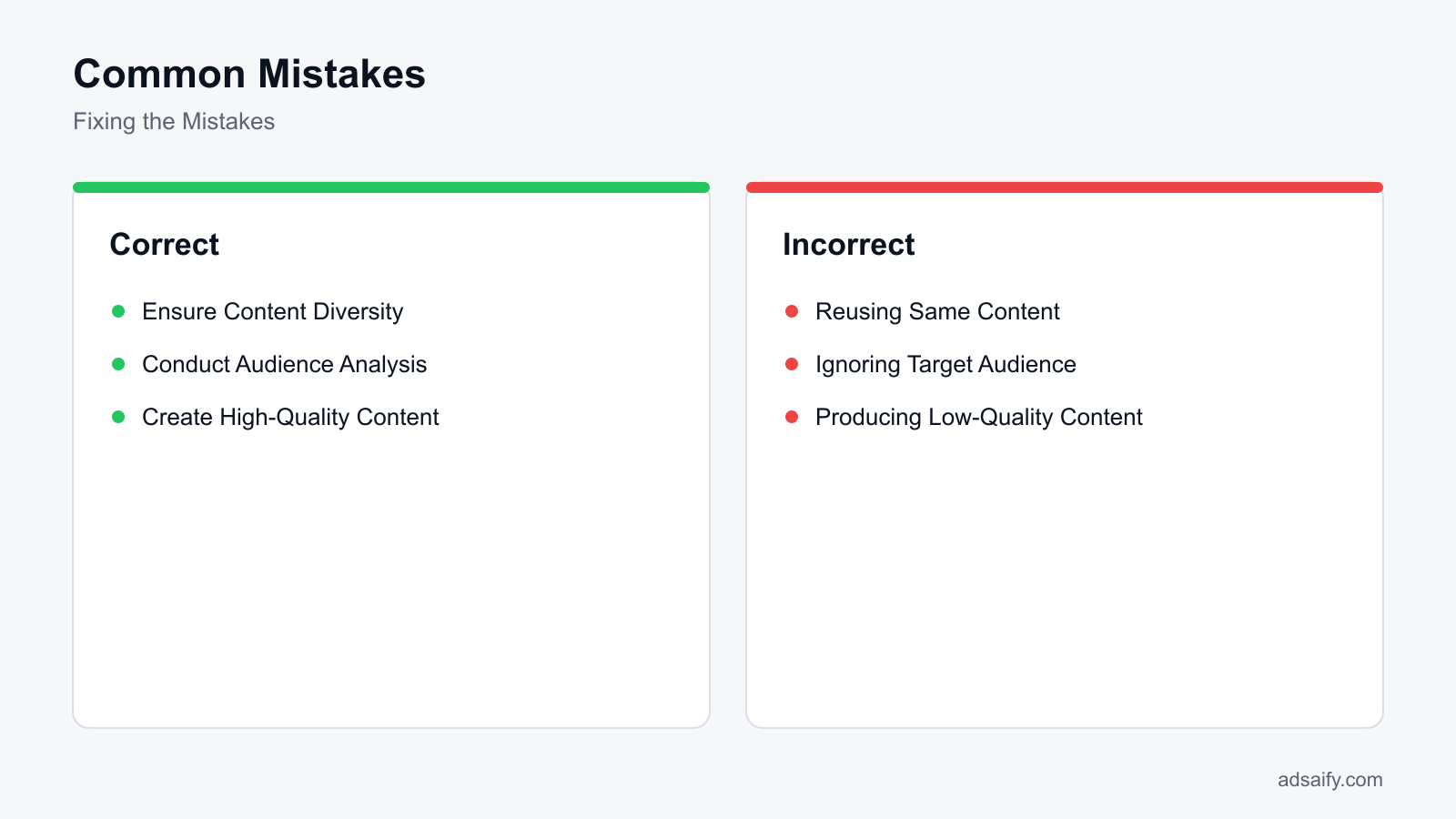
What are the key terms?
Creative fatigue refers to the decline in performance of ad creatives over time, leading to reduced engagement and conversion rates. It occurs when the target audience sees the same ad too frequently, causing them to lose interest. Recognizing creative fatigue is essential for maintaining effective advertising campaigns on Meta platforms.Creative Fatigue
- Identify signs of creative fatigue such as declining click-through rates (CTR) or engagement metrics. - Monitor frequency in Meta Ads Manager; a frequency above 3-4 indicates potential fatigue. - Refresh ad creatives regularly to maintain audience interest and engagement.Conversion Rate
- Track the conversion rate, which is the percentage of users who complete a desired action after clicking an ad. - Calculate it using the formula: (Number of conversions ÷ Total ad clicks) × 100. - A low conversion rate may indicate issues with ad relevance or landing page quality.Click-Through Rate
- Click-through rate (CTR) measures how often people click on the ad after seeing it. - Calculate CTR by dividing the number of clicks by the number of impressions and multiplying by 100. - A declining CTR can signal creative fatigue, necessitating a review of ad content.Target Audience
- Define the target audience based on demographics, interests, and behaviors in Meta Ads Manager. - Regularly update audience segments to avoid saturation and ensure ads reach fresh eyes. - Utilize Custom Audiences and Lookalike Audiences for better targeting.- Monitor frequency metrics in Meta Ads Manager.
- Refresh creatives based on performance data.
- Calculate conversion rates regularly.
- Assess click-through rates to gauge engagement.
- Define and refine your target audience continuously.
- Test different ad formats and placements.
- Utilize A/B testing for creatives.
- Set up automation rules for underperforming ads.
What do these terms mean?
Creative fatigue is the diminishing effectiveness of ad creatives due to overexposure, leading to lower engagement. Conversion rate indicates the percentage of users completing a desired action, while click-through rate measures the effectiveness of an ad in prompting clicks. Target audience refers to the specific group of users that a campaign aims to reach based on various criteria. Understanding these terms is crucial for optimizing Meta ad campaigns.Overcoming Creative Fatigue
To address creative fatigue, regularly refresh ad creatives, analyze audience engagement, and diversify content formats. Implement A/B testing to identify what resonates with your audience. A concrete next step is to explore Adsaify's features today to generate fresh ad creatives and improve your campaign performance. You can start by registering for a free trial at /register.
Want to see this in your own account? Enter your website address and Adsaify drafts the campaign for you. The first ad is free. Try it now or log in.
Frequently Asked Questions (FAQ)
1. What are the signs of creative fatigue?
Signs of creative fatigue include decreased engagement rates, lower click-through rates (CTR), and reduced conversion rates. Advertisements may also receive negative feedback or experience increased ad fatigue metrics, indicating that the audience is no longer responding positively to the same content.
2. Why have my conversion rates dropped?
Conversion rates may drop due to creative fatigue, where audiences grow tired of seeing the same ads repeatedly. Additionally, changes in audience behavior, market trends, or ineffective ad targeting can also contribute to lower conversion rates, necessitating a fresh approach to ad creatives.
3. How long does creative fatigue last?
Creative fatigue can last anywhere from a few weeks to several months, depending on factors like ad frequency and audience engagement. Typically, if ads are shown too frequently without variation, audiences may lose interest and respond negatively, leading to faster onset of fatigue.
4. Where can I find innovative content?
Innovative content can be sourced from various platforms, including social media trends, industry blogs, and user-generated content. Collaborating with influencers or utilizing AI tools like Adsaify can also help generate fresh ideas and creative assets that resonate with your target audience.
5. What can I do to prevent creative fatigue?
To prevent creative fatigue, regularly update ad creatives, use diverse formats, and rotate different messages. Implementing A/B testing can help identify what works best, while audience segmentation allows for tailored content that keeps engagement high and avoids redundancy.
6. How is my target audience changing?
Your target audience may change due to shifts in demographics, interests, or purchasing behaviors. Regularly analyzing audience insights, engagement metrics, and feedback can help identify these changes, allowing for adjustments in ad targeting and content strategy to maintain relevance.
7. How does creative fatigue affect my ad budget?
Creative fatigue can negatively impact your ad budget by increasing costs per click (CPC) and reducing return on ad spend (ROAS). As audience engagement declines, more budget is required to achieve the same results, leading to inefficient spending and potential waste of resources.
8. How can I measure creative fatigue?
Creative fatigue can be measured by tracking key performance indicators (KPIs) such as engagement rates, click-through rates (CTR), and conversion rates over time. Setting thresholds for these metrics can help identify when creatives are underperforming and may need refreshing or replacement.
How can you try this with Adsaify?
The quickest way to apply the steps in this article to your own account is to try them. Adsaify analyses your business from your website address, drafts the campaign with an audience, ad copy, creative and a budget suggestion, and publishes it to your own Meta ad account once you approve.
- Your first ad is free: there is nothing to lose by trying.
- Your own ad account: the campaign runs in your Meta account and you stay in control.
- Images and video: generate ad creatives with AI or promote an existing Instagram post.
Create a free account and try your first ad · Already have an account? Log in.